

I first canoed the Allagash Wilderness Waterway in 1972, at the age of 14. So, when I was invited to paddle the famed river-and-lake system for a second time in the summer of 2025, I jumped at the chance.
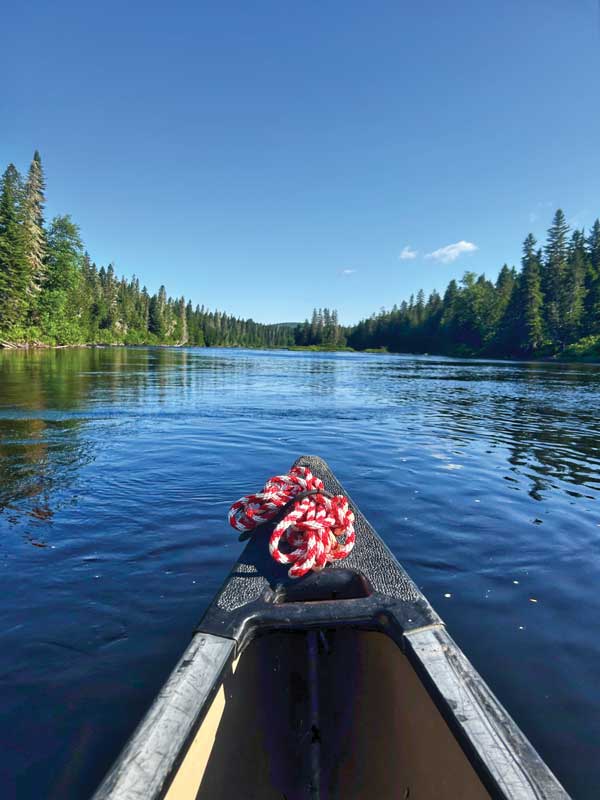
With my recollections from 53 years earlier starting to fade, canoeing the Allagash would give me a chance to rekindle old memories and, more importantly, establish new ones. The five-day, four-night adventure did all that—and more.
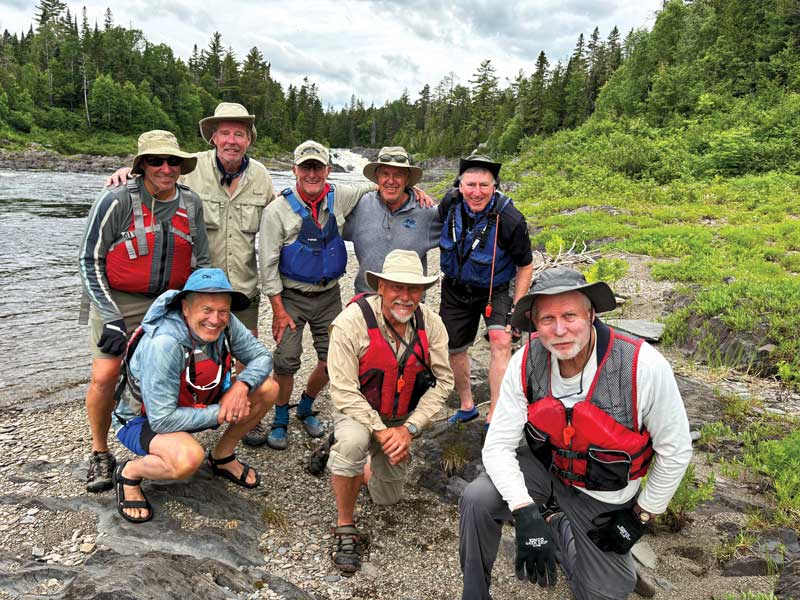
A group of eight of us met on a Sunday at a motel in Fort Kent, where we stayed for the night. We were all in our mid-60s to mid-70s, and either retired or nearing retirement. And, we had varied backgrounds: journalism, law, finance, business, real estate, engineering, health care, land conservation.
For the trip, we hired a guide to lead us down the river, provide basic essentials, and cook meals. Tom Gerard, who has been a professional guide for 22 years,
has made more than 30 trips down the Allagash, either the entire length of the 92-mile waterway, or different parts of it.
“Every section of the river is unique,” he said.
So on a hot late-June day, we headed off to canoe the river section of the Allagash Wilderness Waterway, foregoing the first 35 miles that is comprised of large lakes. Here’s what I came away with.
Beauty and Blackflies
Tell somebody you’re going down the Allagash, and you might hear a few different reactions.
- Mosquitoes (and other annoying insects): Swarms of blackflies? Rather, we enjoyed bunches of butterflies. When stopping on shore for mid-morning snacks or lunch, hundreds of White Admiral butterflies fluttered around us, often perching on our picnic table, in trees, and even on our shoulders. It was magical enough for us to ignore the relatively few blackflies that we did encounter. As a bonus, we didn’t have to deal with ticks—they don’t live that far north in Maine because of the colder climate.
- Remoteness: Getting away from it all was one reason I was all in on the trip. In all, it took about nine hours—including three hours on logging roads in a shuttle van—to get from Portland to our launch point. There’s also no cellular service, so no phone calls, texts, emails, or scrolling the internet for the news of the day. Being free of the craziness of the world for five days was a blessing.
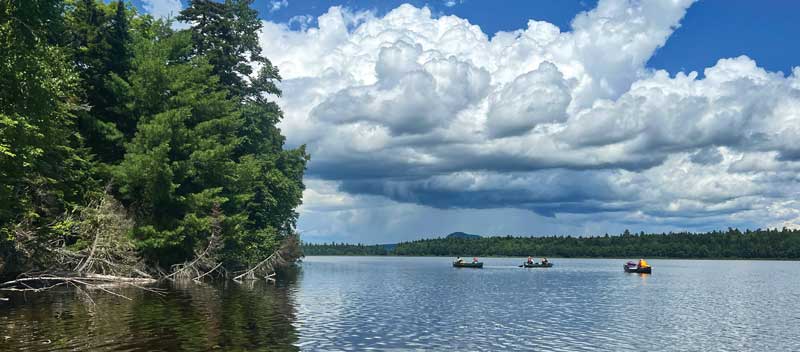
- Natural beauty: Between the forests, the moose and deer, the star-filled night skies, the call of the loons, the early morning mist, and the wild thunderstorm that passed over us the first night, the Allagash is exquisite.
Physical (and Mental) Exertion
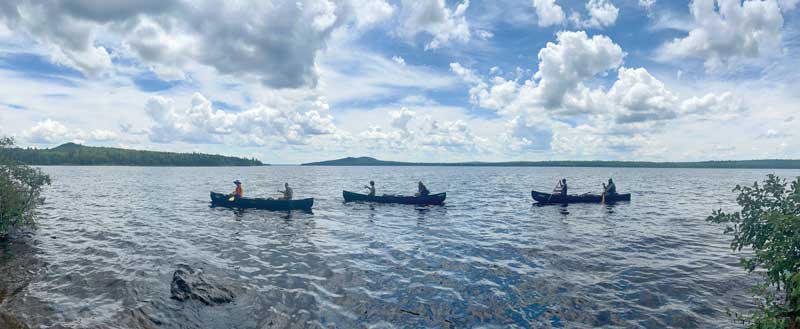
Canoeing nearly 60 miles—18 miles on Day 3 alone—along with loading and unloading canoes, setting up tents, and preparing the campsite takes physical effort, especially on the lakes where you typically don’t have any moving water.
But navigating the rips and rapids of the river portion of the Allagash also takes mental exertion. When you’re a middling canoer like me, paddling can be stressful, knowing that any of the many, many rocks and boulders might bring you to a stop or capsize your boat. But nobody tipped over and only once did one of the canoes partially swamp after getting stuck broadside between two large rocks.
Running Like Clockwork
A symphony of birds served as our alarm clock when they began their morning chirping and cheeping at the crack of sunrise.
The coffee, Wicked Joe Allagash Blend, was ready at 5 a.m., followed by a full breakfast by 6. Down with the tents, load the canoes, and back on the river between 7 and 7:30.
Paddle for three hours or so, then stop for a mid-morning snack. Back on the river before stopping again for lunch, with make-your-own sandwiches stuffed with ham, turkey, roast beef, bologna, salami, along with pickles, chips, salted shallots (made locally in northern Maine using a traditional French-Canadian recipe), and Oreo cookies.
Refueled, we’d hit the river again for a final paddle before arriving at our campsite between 2 and 3 in the afternoon. By arriving early, we lessened the chance of the campsite already being taken, while having plenty of time to set up tents, get comfortable, and relax before the evening meal.
We ate dinner in the early evening, cleaned up, and swapped stories and laughs before hitting the sack around 9—tired bodies ready to rest.
Food, Glorious Food
I don’t even remember what we ate when I canoed the Allagash with a group of boys from the Robin Hood Camp in Brooksville when I was 14. That must mean the food wasn’t memorable.
But with his menu planning, culinary skills, and seemingly endless food supply in his coolers, Gerard prepared us feasts for breakfast and dinner.
During our trip, breakfasts included fried eggs, pancakes, buckwheat ployes, breakfast sandwiches (ham, egg, and cheese), sausage, bacon, beans, and home fries.
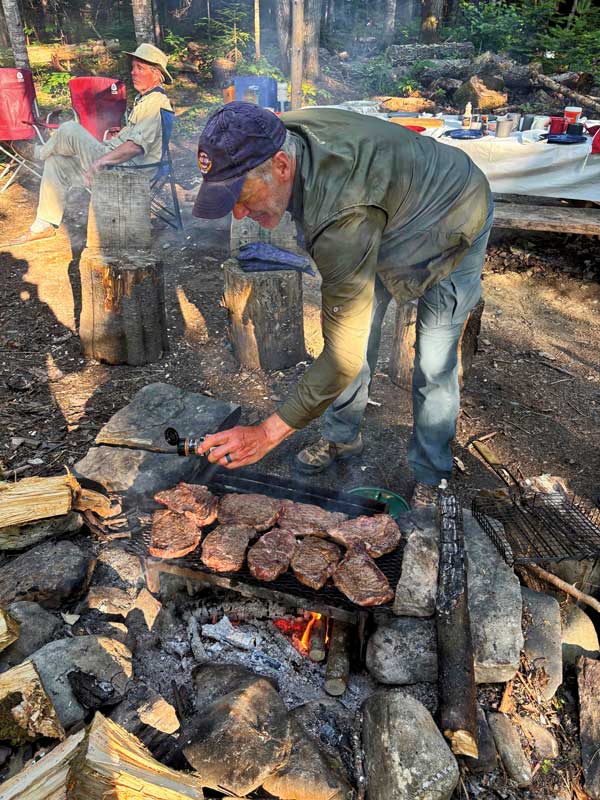
Dinner included spaghetti with meatballs and sausage (with Caesar salad and garlic bread), chicken (with green beans and rice), and salmon fillets (with boiled potatoes, peas and bean salad). On the final night, we devoured huge ribeye steaks (with coleslaw and mashed potatoes).
Watching Gerard pull a seemingly endless amount of food from his coolers was like watching a magician pull things out of a bottomless hat. His 16-inch fry pan was big enough to cook 18 fried eggs, nine salmon fillets, or a couple of dozen breakfast sausages at a time.
Cooler tip: To keep his food cold for an extended period, Gerard freezes milk jugs full of water to act as his ice blocks.
Sharing the River
I remember seeing very few people when I canoed the Allagash decades ago. This time around, there were others enjoying the waterway, with smiles and looks of satisfaction on their faces.
As we prepared to launch our canoes on Day 1, I struck up a conversation with a man from Old Orchard who had been paddling for 47 days on the Northern Forest Canoe Trail (see sidebar on page 32). He was nearing the end of a trip that covers 740 miles from upstate New York to Fort Kent. So much for me thinking I was roughing it.
The first question he asked me: Who won the NBA playoffs? (It just so happened Oklahoma City had won the championship the night before.)
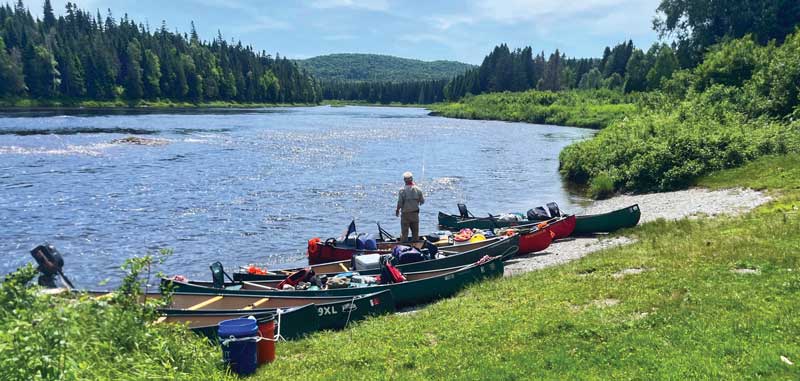
Then there was the man who was paddling with his 18-year-old son in the bow, and his 22-year-old son in a kayak. The man was from Massachusetts and had canoed the Allagash every year, sometimes twice, for at least the past 10 years. But, he added, he usually made the trip in May or October. No blackflies then, he explained.
After our group portaged around Allagash Falls, we spoke to a group of six women paddlers who were associated with the Northern Forest Canoe Trail and Teens for Trails organizations. They were canoeing part of the Allagash and St. John rivers to Fort Kent as culmination of a three-year effort to connect youth outing clubs with every section of the Northern Forest Canoe Trail located in Maine. Working collaboratively, NFCT and Teens for Trails are aiming to introduce students with the outdoors and foster a sense of pride in their local waterways.
Outhouses and Picnic Tables
The Allagash campsites were impressive, with fine fire pits and huge picnic tables that could seat up to a dozen people. And the outhouses were in great shape, almost like being at home.
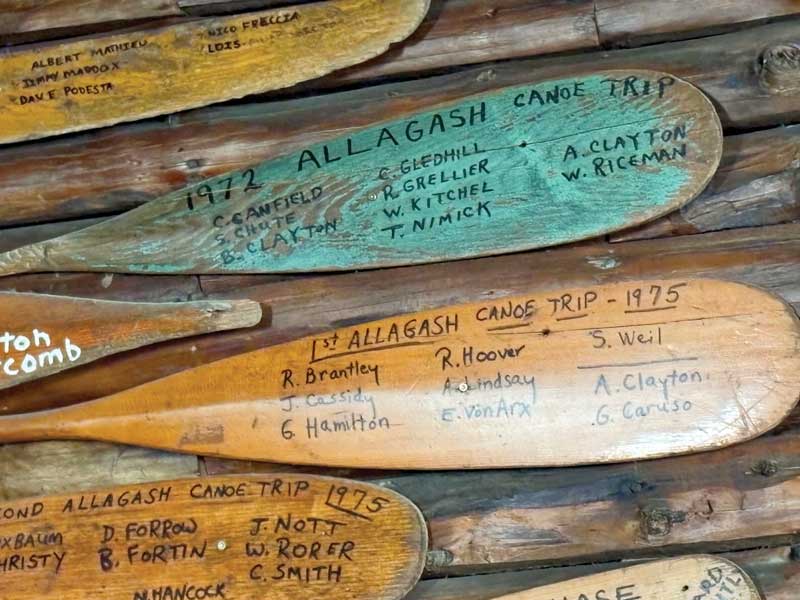
Which got me to thinking about my paddle as a 14-year-old. Were there outhouses then? I couldn’t remember, so I checked the 1972 yearbook from the boys’ camp and found a page with a description of the trip written by the trip leader, a counselor and expert canoer named Al Clayton.
In it, he wrote about the enjoyment, learning experiences, and satisfaction of canoeing the Allagash. But he also described the hardship and character-building of paddling in the rain, setting up camp when it’s wet, and the desire to get into dry clothes.
“Finally, the thought of striking out into the woods with a shovel and a bum wad is about the last straw,” he wrote. That answered my question about whether there were outhouses back then.
Toes First
You can’t go over the 40-foot Allagash Falls in a canoe, but you can jump in the waters below the falls and float gently downstream. Toes first, of course.
After we carried our canoes and gear 1/3 of a mile around the falls to a launch spot far below the waterfall, several of us took a trail through the woods to a spot not far from the falls. There, we jumped into the river with life preservers on and floated downstream. It was like floating on a cloud.
✮
Clarke Canfield is a longtime journalist and author who has written and edited for newspapers, magazines, and the Associated Press. He lives in South Portland.
About the Allagash
The Allagash Wilderness Waterway was established by the Maine Legislature in 1966 to preserve the natural character and habitat of a unique area. It was given additional protection in 1970 when it was named the first state-administered component of the National Wild and Scenic River System.
It has fueled people’s imaginations for centuries, and was visited briefly in 1857 by Henry Thoreau. Today, thousands of people visit the waterway each year for the ultimate break away from it all. For more information, visit the Allagash Wilderness Waterway Foundation at awwf.org.
The Ultimate Paddling Challenge
If you’re up for a canoeing challenge but want a more demanding test than the Allagash Wilderness Waterway, the Northern Forest Canoe Trail might be the ticket.
The 740-mile-long waterway system is the nation’s longest inland water trail, starting in Old Forge, New York, and ending in Fort Kent. It follows traditional travel routes used by Native Americans, settlers, and guides. The Allagash and St. John rivers make up the final 100 miles or so of the trail.
With 23 rivers and streams, 59 lakes and ponds, and 65 portages totaling more than 70 miles, traveling the entire trail takes planning and fortitude. Paddlers have to contend with large lakes, strong headwinds, paddling upstream, and portaging long distances—the longest mandatory portage is nearly 6 miles.
And don’t forget your passport, which you’ll have to show when you canoe from Vermont into Quebec, Canada, on the Missisquoi River and when you cross back into Vermont on Lake Memphremagog.
Since the trail was founded in 2006, about 175 people have submitted paperwork with the Northern Forest Canoe Trail organization documenting that they canoed the entire trail as thru-paddlers, according to NFCT Executive Director Karrie Thomas.
On average, it takes the typical canoer about six weeks to finish. The fastest thru-paddler took just 17 days, Thomas said.
People are drawn to paddle the NFCT because it allows them to explore nature and themselves. It also allows them to push their limits.
“I think it’s a desire,” Thomas said, “to test their mettle.”
Find out more about the Northern Forest Canoe Trail at northernforestcanoetrail.org.