

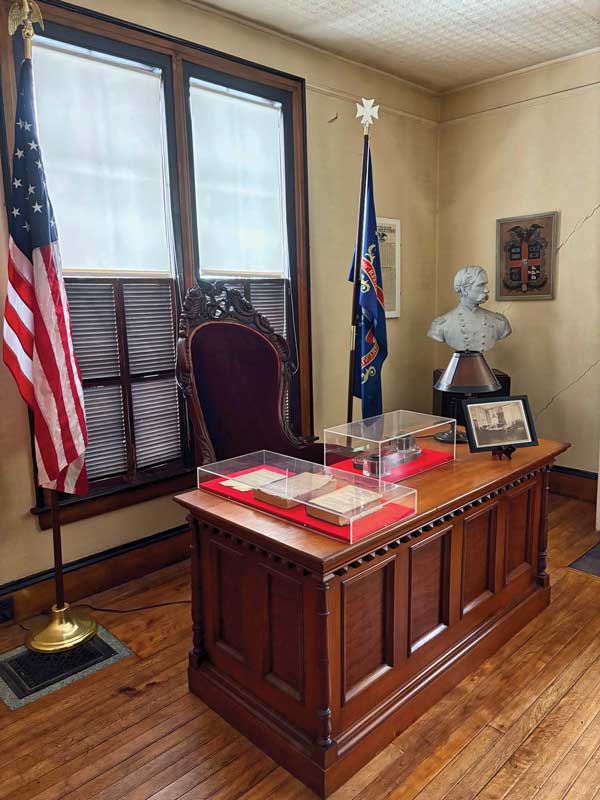
Joshua Lawrence Chamberlain is one of the most revered figures in Maine history. His service in the Civil War, as governor of Maine, and as president of Bowdoin College have been the subject of books and movies. Statues of him have been erected near his birthplace in Brewer and across from his house in Brunswick. Currently, there is even a proposal to place a Chamberlain statue in the U.S. Capitol’s Statuary Hall.
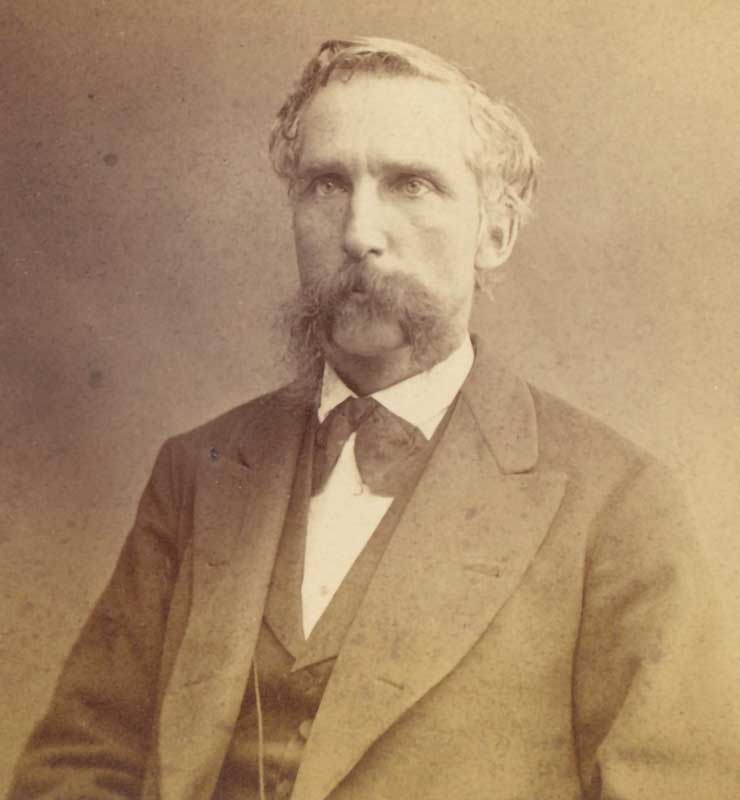
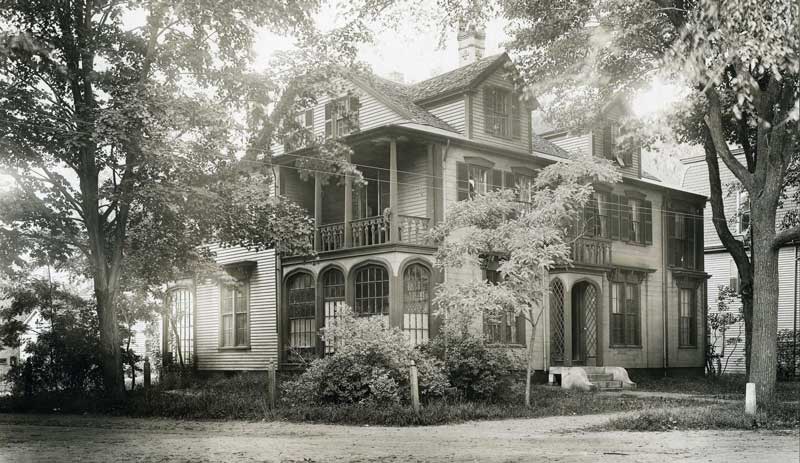
Since 1984, Chamberlain’s home on Maine Street in Brunswick has been open to the public as a museum owned by the Pejepscot History Center. Among the many objects on display are a desk and chair used by Chamberlain during his four terms as Maine’s governor. How they found their way to Brunswick is a fascinating story.
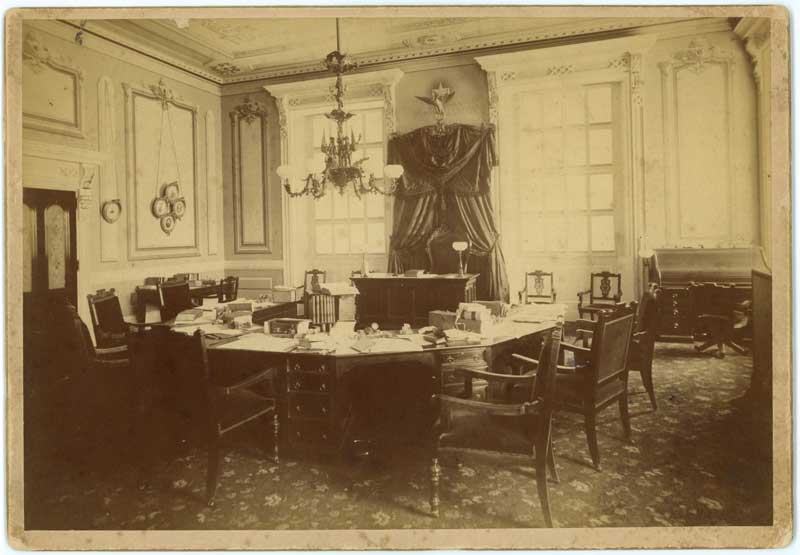
Shortly after Chamberlain took office as governor in 1867, the Maine Executive Council authorized the expenditure of $5,000 to purchase furniture for the State House. A portion of these funds was spent to refurnish the Executive Council Chamber, where the seven council members met to advise the governor on the affairs of state. The councilors’ chairs were modest in style, and they sat around a simple u-shaped desk. Chamberlain’s chair, however, was a large, throne-like, Rococo Revival gentleman’s chair, adorned with carvings and topped with an eagle and a star that represented the governor’s rank as a general. This grand chair was accompanied by a handsome paneled desk.
When Chamberlain left the governorship in 1871, his desk and chair continued to be used by governors in the Executive Council Chamber until the early 20th century. During the governorship of John Fremont Hill, from 1901 to 1905, Edward E. Chase Sr., a Blue Hill attorney, served on the Executive Council. According to the Chase family, Governor Hill gave Chase the Chamberlain desk and chair, and these historic pieces of furniture were removed from the State House to the Chase home in Blue Hill.
Then in 1939, Edward E. Chase Jr., then a trustee of the University of Maine at Orono, loaned the desk and chair to the college. From the late 1930s to the early 1970s, the chair was used by university presidents during graduation ceremonies and for crowning homecoming queens. The desk was kept in the Special Collections division of the Fogler Library, while the chair resided in the registrar’s office.
The early 1970s marked a growing interest in Chamberlain, resulting in part from the popularity of such books as The Twentieth Maine: A Volunteer Regiment in the Civil War by John J. Pullen and Soul of a Lion by William M. Wallace. One of Chamberlain’s many admirers was Maine governor Kenneth M. Curtis. In the fall of 1973, Curtis asked James H. Mundy, director of the Maine Historic Preservation Commission, to find Chamberlain’s desk and chair.
Mundy’s connections to the University of Maine soon led him to discover the historic furniture on the Orono campus. With the permission of the Chase family, the loan of the desk and chair was transferred from the university to the Maine State Museum, and the two pieces were displayed in Curtis’s office for the remainder of his term.
From 1975 to 1983, the desk and chair were shown in the Secretary of State’s State House office. With the establishment of the Chamberlain Museum by the Pejepscot History Center in 1983, the Chase family authorized the transfer of the governor’s desk and chair from Augusta to Brunswick. Acting on behalf of the family in 1992, Chase descendent Wallace W. Hinckley donated the desk and chair to the museum, where they are now on permanent display. Thus, these two remarkable objects associated with one of the most illustrious figures in Maine history found their appropriate home.
✮
Earle G. Shettleworth Jr. directed the Maine Historic Preservation Commission from 1976 to 2015, and he has served as Maine State Historian since 2004.