

Paintings by Eric Hopkins
Growing up on North Haven Island in the 1950s and ‘60s, the artist Eric Hopkins was as aware of summer people as any island boy was.
From Memorial Day on, wealthy families arrived from New York City, Philadelphia, Boston, and other eastern parts to take up residence in their seasonal homes. He would see them at his father’s fish market and marina, in his mother’s shop, at the post office, and here and there in his wanderings.
Hopkins describes what he saw as a “delicate balance” between native and visitor. “A lot of the summer people envied the year-rounders for being able to live in this beautiful place—‘North Heaven’ they sometimes called it—all of the time.” In turn, he says, islanders looked on the wealth and prosperity of their fair-weather visitors with a sense of reserve; focused on making an island living—getting the boat in the water and the house painted on time—they generally respected the summer people’s privacy.
“There’s a sense on North Haven that people don’t really care what the big world, big deal is,” the artist said. To illustrate his point, he recounted how one morning back in the 1920s his grandfather Elmer Hopkins was readying for the day when he caught sight of John D. Rockefeller, III, walking up the road from the early ferry. He yelled out, “John!” to which there was no reply. He called again, “John!” No response. On the third try, Rockefeller turned and said, “Are you speaking to me?” to which Hopkins replied, “Your name’s John, ain’t it?”
On North Haven, to the islanders, he was John, not “Mr. Rockefeller, sir,” and according to grandson Eric many summer folk appreciated this break from social hierarchies.
Around age five or so, Eric Hopkins became aware of another summer family, the Morrows, who owned Deacon Brown’s Point on the northwestern corner of the island. It would be several years later that he would learn of their connection to Charles Lindbergh, the aviator who gained international celebrity in 1927 by being the first person to fly solo nonstop across the Atlantic Ocean in a plane named Spirit of St. Louis.
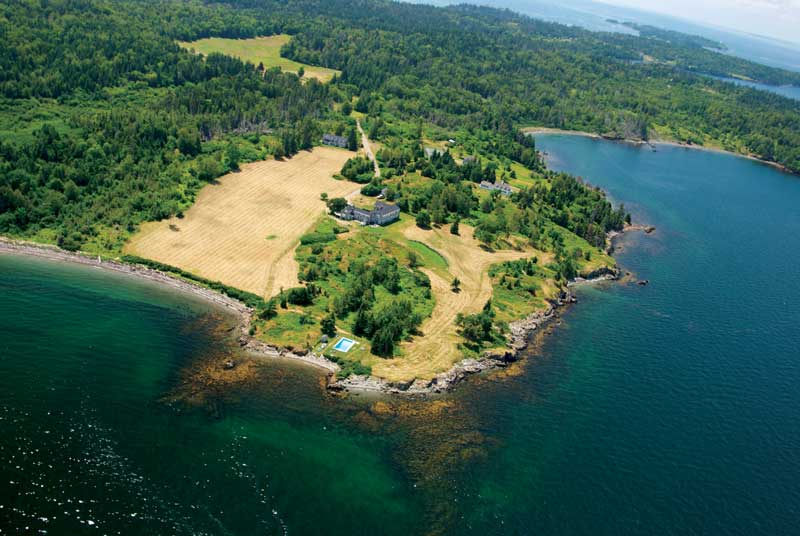
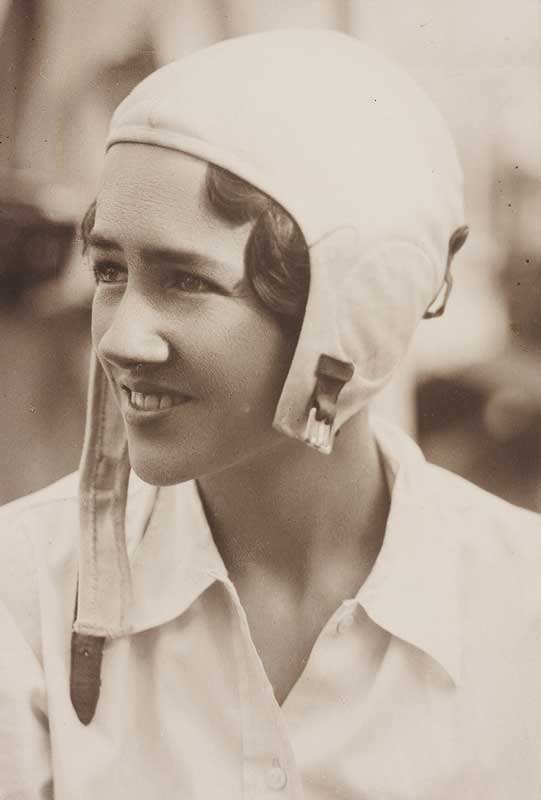
Dwight Morrow and his wife Elizabeth built their house on Deacon Brown’s Point in the 1920s. In the late 1920s Morrow, a successful businessman, was the U.S. ambassador to Mexico. In that capacity, he invited Lindbergh to fly to Mexico City on a good will mission. Lindbergh met Morrow’s 21-year-old daughter Anne on the visit; they fell in love, were married, and spent their honeymoon on North Haven.
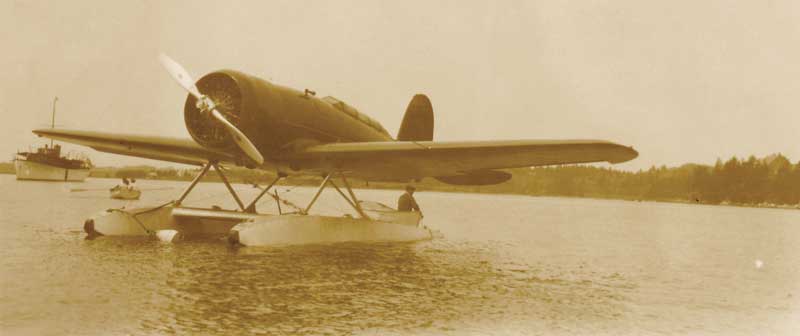
In 1929, the same year they were married, the Lindberghs purchased Sirius, a Lockheed monoplane. Then, on July 25, 1931, they embarked on a flight following the great-circle route—the fastest—between New York and the Far East. Anne Morrow Lindbergh described that flight in North to the Orient, which won the very first National Book Award for nonfiction in 1936. The title might well have been North Haven to the Orient, for Mrs. Lindbergh described the Penobscot Bay island as the true starting point of the journey.
“As I visualize that summer’s flight,” she wrote, “stretching like a taut string over the top of the globe, the knotted end is held fast in North Haven.”
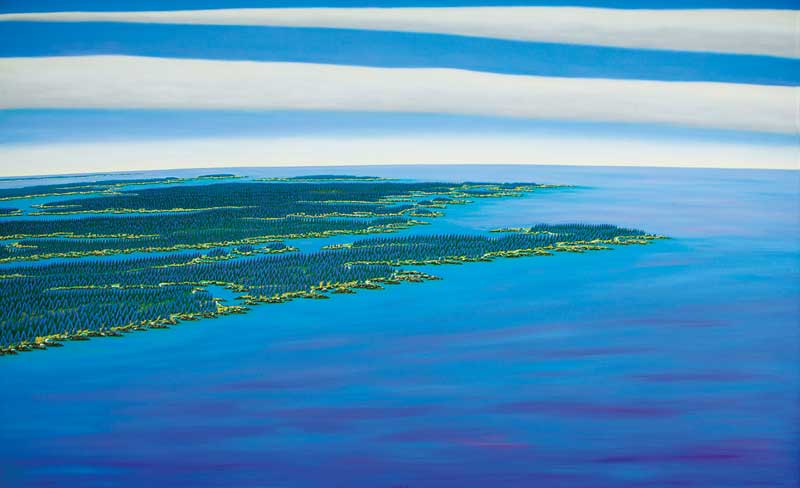
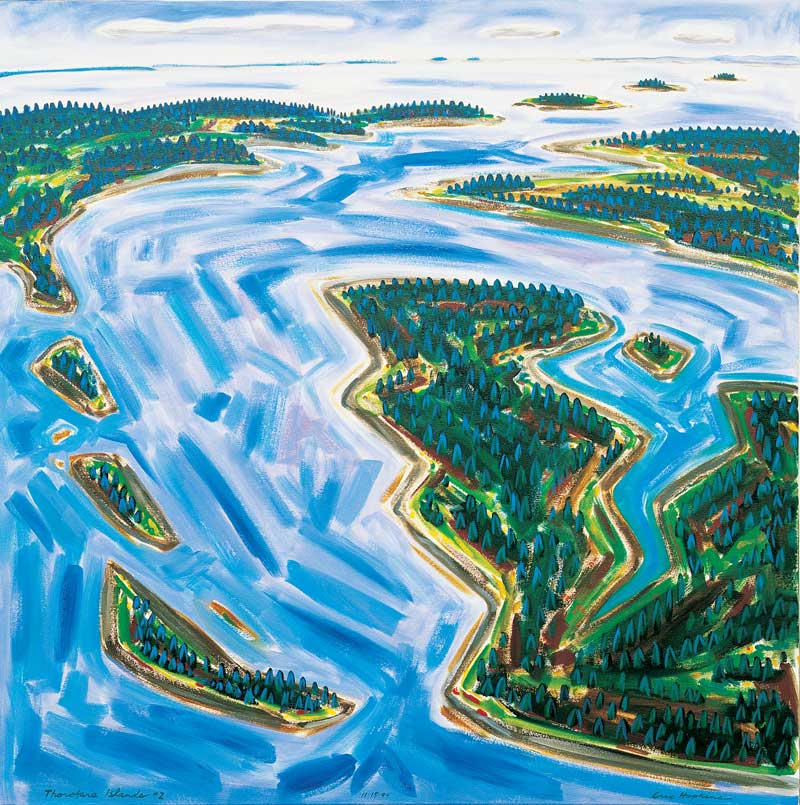
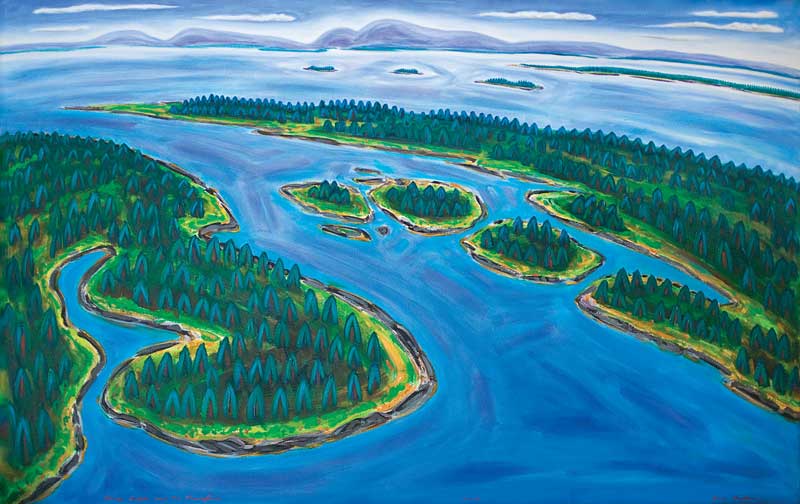
In The early 1980s, having completed his studies at the Rhode Island School of Design and having taken a turn in the world of fine art glass, Eric Hopkins returned to North Haven. He, too, took up flying. The view of the Maine islands from the air captivated him, and soon he was creating the paintings of land and sea for which he has achieved great acclaim.
Hopkins knew about Spirit of St. Louis and had read a bit about Charles Lindbergh, but now, a flyer himself, he made the North Haven connection. “I realized I’d seen these photographs of this guy landing in the Fox Island Thorofare, and I understood, in a historical context, how important he was.” He also came to realize the special place the island held in the history of aviation—and Anne Morrow Lindbergh’s stature in the pantheon of American flyers.
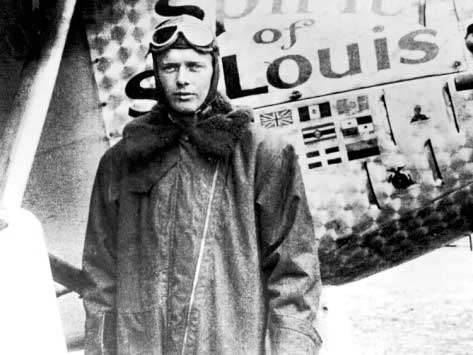
An entree to the Lindbergh family occurred one day in the early 1980s when Anne, the Lindberghs’ eldest daughter, came by Hopkins’s studio on a mission: she had seen some of his aerial paintings and, she told him, had to have one. “That was sort of a foot in the door,” he explained, “that I was an artist and painting aerial things.”
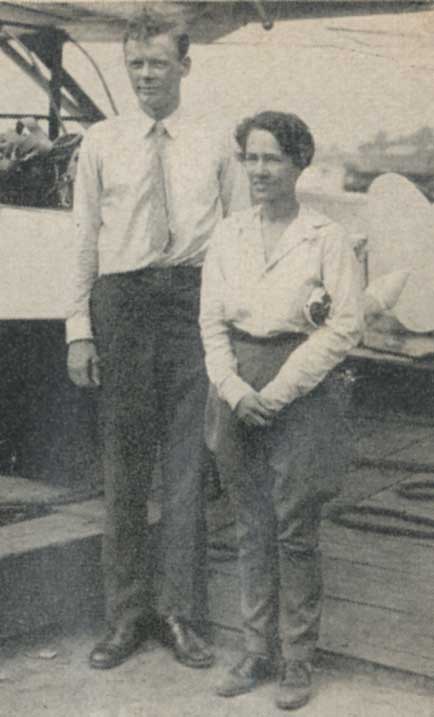
Some time later, Anne Morrow Lindbergh, now in her late 80s, stopped in at the painter’s gallery on a North Haven wharf and asked to see some of his work. As she sat in a chair, attentive and polite, Hopkins showed her watercolors and other small works he had in stock. Sensing that this particular presentation was not “her thing,” in a moment of inspiration he asked her if she would like to visit his Southern Harbor studio. “She lit right up,” Hopkins recalled.
Hopkins was painting large aerial views at the time, some as large as 4 by 6 feet. While she had sat passively in the gallery, Mrs. Lindbergh now felt compelled to stand to view these bold aerial images of the Penobscot Bay islands. “She held onto the back of a chair and seemed to bank into the paintings,” Hopkins recalled. “‘That’s what it’s like from the air,’ she said, ‘that’s what it’s like flying.’”
From that visit came the purchase of one of Hopkins’s paintings and also the idea for a joint exhibition. “That’s What It’s Like Flying” was mounted at the Eric Hopkins Gallery in 1996 on the occasion of the 65th anniversary of Charles and Anne Morrow Lindbergh’s groundbreaking 1931 flight from North Haven to the Orient. Curated by niece Margaret Eiluned Morgan, the show featured aerial photographs that Anne and Charles had taken of North Haven and the surrounding area, excerpts from Mrs. Lindbergh’s writings, and a selection of Hopkins’s pilot’s-eye paintings.
When reflecting on the Lindberghs daring 1931 flight, Hopkins speaks with awe. “Imagine,” he said, “a 23-year-old woman with little aviation experience marrying this young pilot and then flying around the world with him two years later. If a woman of that age were to do something like that today, even with all the new technology we have available,” he added, “it would still be a phenomenal experience.”
As would be a flying exploit by the pilot late in her life. Hopkins remembers being at the North Haven airstrip one day in the mid-1990s when a plane arrived from Portland. After it landed, Mrs. Lindbergh emerged, elderly, somewhat feeble, returning to the island for a rare visit. Her family and caregivers hovered around her, making sure she deplaned smoothly. Hopkins was close enough to hear the young pilot exclaim, “She flew the plane from Portland up! She’s still got it!” Mrs. Lindbergh wore a wide smile, Hopkins recalled, “like she was back in her element”—the air and the island.
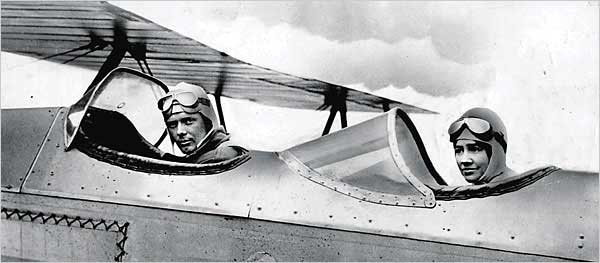
Hopkins’s admiration for the Lindberghs extends to the work of the Lindbergh Foundation, established when Charles died in 1974. “After World War II,” he explained, “the two of them realized what a mess things were and how we were using planes to drop bombs.” The foundation’s mission is to further the idea of a balance between nature and technology.
Through Anne Eiluned Morgan, Hopkins became involved in the work of the EarthShine Institute, a supporting organization of the Lindbergh Foundation, of which he served as president for a time. In 2001, on the occasion of the 70th anniversary of the famous “North to the Orient” flight, Hopkins and his son Ian attended a special dinner at the National Air and Space Museum in Washington, D.C. The Lindbergh airplanes—Spirit of St. Louis and Sirius—were hanging suspended over their heads.
On November 13, 2004, Hopkins delivered a talk, “From the Atom to the Stars: Exploring the Creative Spirit—The Outward and Inward Journey,” at the Lindbergh Symposium hosted by the EarthShine Institute at Florida Gulf Coast University. In it he paid special tribute to North Haven Island, “the spiritual homeland to many people,” seasonal and year-round. He was thinking of the Morrows, the Morgans, the Lindberghs, the Hopkinses and everyone else who have made the island their spiritual home base, “where they really feel like they belong.”
Writing in her journal on March 17, 1929, while in Mexico, the young Anne Morrow wrote, “What I want just now is North Haven. Wind to blow all the stuffiness out and a cool thick sea mist that pricks your face softly, deliciously, when you walk in it—and loneliness.” Throughout her life the island served as a touchstone, a place of retreat and renewal—a sea-surrounded spot on Penobscot Bay with special qualities known to aviators and artists alike.
Carl Little is the author of Above and Beyond: The Art of Eric Hopkins.
“The Island Falling Away Under Us”
On July 30, 2011, 80 years to the day after the Lindberghs’ pioneering north to the Orient flight, Eric Hopkins, photographer Elisa Hurley, pilot Roger Wolverton, and I climbed aboard the seaplane Island Spirit at Knox County Regional Airport for a reenactment of sorts of the start of that remarkable flight.
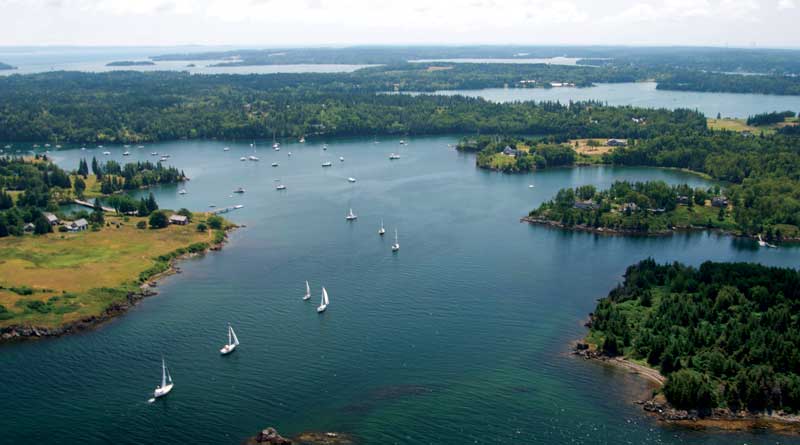
As we made circling passes over North Haven, Hopkins pointed out landmarks and features beneath us, including the White Islands off Vinalhaven, which the Lindberghs had received as a wedding present in 1929 and which are now a Nature Conservancy preserve, and some of his haunts and the homes of friends. An observation Anne Lindbergh made in North to the Orient came to mind:
“The different parts of North Haven,” she wrote, “which had once been many complicated worlds, were joined together and simplified by this enveloping glance from the air.”
There had been changes since 1931. Houses had been built here and there, some of them quite imposing, and spruce trees had reclaimed sections of sheep fields. The grassy airstrip Charles Lindbergh had established in a field by his wife’s family’s home on Deacon Brown’s Point remained; we marveled at its short length. The greatest visible change was on Vinalhaven, the next island over: the huge wind turbines that provide electrical power to the Fox Islands. The blades turning in the wind recalled the propellers of the Lindberghs’ airplane.
What hadn’t changed for us was the wonder and excitement of flight in a small plane. At 12:06, the time the Lindberghs are thought to have lifted into the air, Captain Wolverton executed a smooth touch-and-go in the Fox Island Thorofare. And then we experienced a vision not unlike the one Anne Lindbergh described in North to the Orient: “The island falling away under us as we rose in the air lay still and perfect, cut out in starched clarity against the dark sea.” —CL