

Photographs by Lynette Walther
An early fall storm that took down trees and electrical lines got us searching for the oil lamp. The subsequent entire day and night sans power tested our patience with light switches that refused to respond, and our ingenuity, as well as the consistency of the ice cream slowly turning to mush in the freezer compartment of the refrigerator. Yet all around us, home generators hummed throughout the lengthening night.
 We’re not exactly Luddites. Nonetheless, we seem to be the lone holdouts in our neighborhood who live without emergency electricity. And as I struck the match to light our old lamp, I thought of the elderly man from whom we had bought a replacement burner for that very lamp a few years back.
I vividly remember that shopping trip, as he led us down a hallway to his workshop where he had a treasure trove of parts for oil lamps. He knew right off what was needed for our burned-out lamp. I surmised he must be gone now, and wondered who might take his place to supply oil lamp and lantern parts.
As I sat, the glow of that lamp barely lighting up our little barn as it cast intriguing shadows on the beams above, I realized that there really wasn’t any market for oil lamp parts anymore. It dawned on me that we were probably the only ones in our neighborhood who were lighting a lamp as the night fell. Instead, brightly lit windows were all around. But inside those homes no one was experiencing the warmth and simple joy and comfort of an oil lamp lighting up the darkness. Sure, their ice cream wasn’t melting, but nevertheless I think they were missing out on something special.
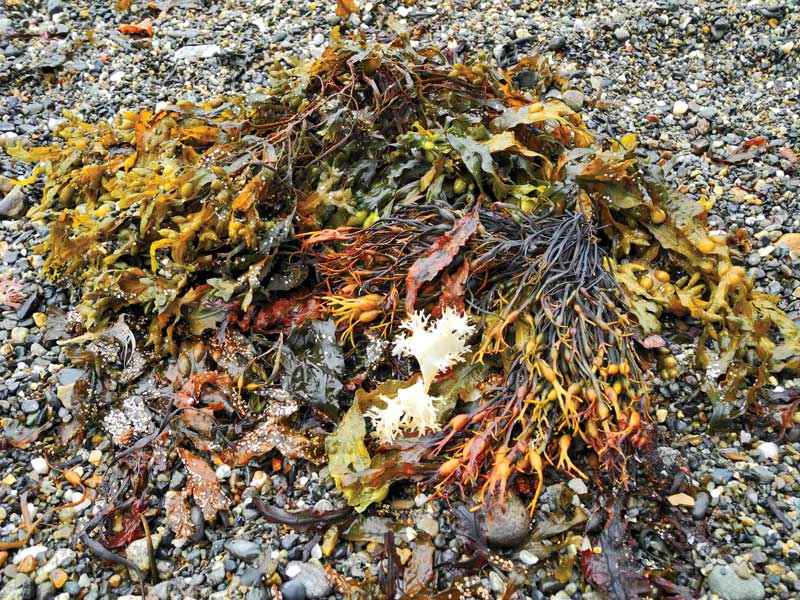
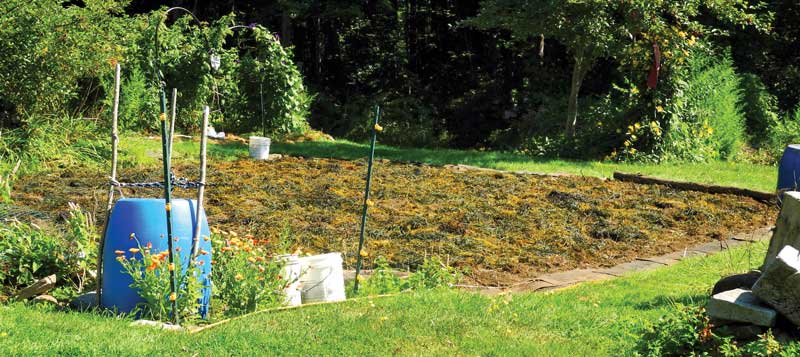
Meanwhile as all this was going on, outside in my little yard several bags of seaweed sat patiently waiting to be spread on the raspberries and around the roses and a few other select plants. My reverie about the oil lamps got me thinking about that seaweed as well. I’ve long promoted the benefits of seaweed for the garden. It provides a free source of trace nutrients such as iron, copper, zinc, boron, and manganese that are readily absorbed by plants. Brimming with these minerals straight from the sea, seaweed can be considered a broad-spectrum fertilizer. As a bonus, scientists have found that seaweed contains hormones that can stimulate plant growth.
One report states, “Plants in seaweed-amended soil grow faster and larger than plants in soil with a comparable amount of conventional fertilizer. And when worked into the soil, seaweed can improve aeration and soil texture.”
All garden plants love seaweed, anything from ornamentals (roses adore seaweed) to vegetables, and especially to fruit trees, berries, and herbs, which benefit from the addition of seaweed either directly to the soil or in compost. Being low in cellulose, seaweed breaks down quickly. It can actually repel slugs and insects, possibly preventing disease too.
According to one fact sheet from the Maine Organic Farmers and Growers Association, “Some scientists believe that seaweed has developed antitoxins to fend off bacteria and viruses in the ocean. In the gardens, these antitoxins interrupt the reproductive cycles of some insects and appear to repel others. Seaweed also reduces fungi when applied to plants or soil. In tests at the University of Maryland, seaweed meal reduced soil nematodes in turf grass plots. Clemson University studies showed fewer aphids and flea beetles on foliar-threatened plants, and other studies showed resistance to spider mites and scab. In Clemson studies, fruits and vegetables treated with seaweed didn’t grow mold and thus had a longer shelf life.”
But what seaweed does not contain also makes it great for our gardens. Seaweed does not harbor insect eggs, plant diseases, or weed seeds. And no, you don’t need to wash it before using. While gathering seaweed can be a chore, I’ve always enjoyed the idea of making use of this free resource.
Like our old oil lamp being charming but obsolete, I wonder if anyone today wants to go to the trouble of gathering seaweed. One thing is for certain, those violent storms always manage to wash up a whole lot of it that’s ready for anyone to gather and put to use.
✮
Contributing Garden Editor Lynette L. Walther is the recipient of the GardenComm Gold Award, Maine Press Association’s Community Columnist Award, and National Garden Bureau’s Exemplary Journalism Award, among others. She gardens in Camden.