

Photos by Mimi Bigelow Steadman
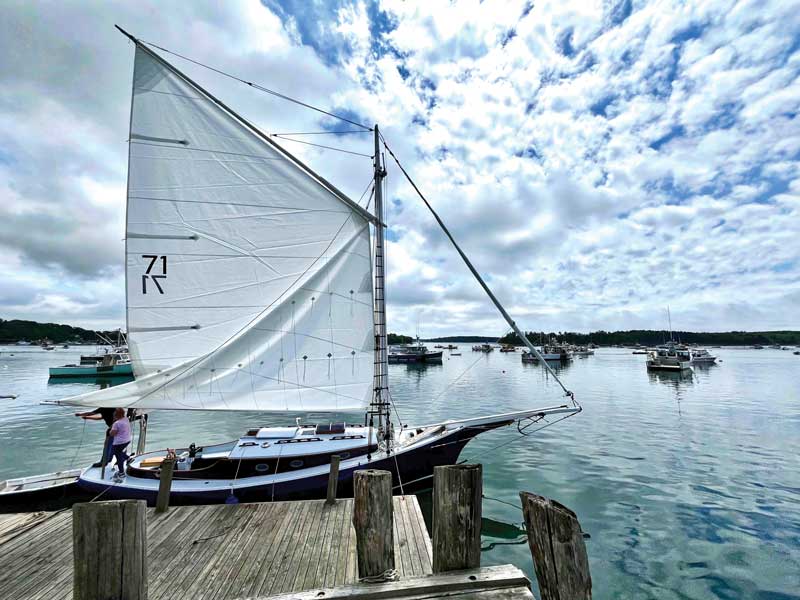
As we walked down to the harbor in Friendship, we were delighted to see the Friendship sloop Gladiator tied up at Simmons Wharf, one of several docks that line the working waterfront. Built in 1902 and beautifully restored, it is the only Friendship sloop homeported in this salty Midcoast town today. On that nearly windless late-June day, her gaff-rigged mainsail—looking brand new—was fully raised while her captain stood astern in the dinghy as he tied the clew to the end of the boom.
Gladiator and its sister sloops were built in the late 1800s and early 1900s for tending traps on Muscongus Bay. Averaging 30 feet in length, the crafts’ handy, not-too-tall rigs made it possible for lobstermen to sail singlehandedly to their pot buoys, stop, haul a trap, and continue to the next one. A century after they were displaced by powered fishing boats, their graceful profiles, clipper bows, and long bowsprits continue to inspire fervent admiration.
Lovingly restored originals like Gladiator, as well as faithful reproductions that have never shipped a lobster trap, can often be spotted along the Maine coast. Every summer, owners gather in various locations to celebrate their treasured vessels. The most notable event is Rockland’s mid-July Homecoming Rendezvous and Races.
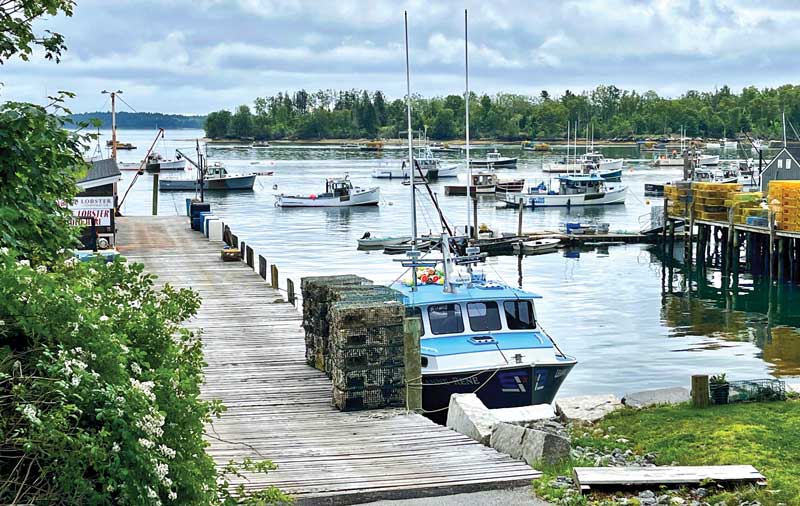
Just beyond Gladiator’s bowsprit, a fleet of handsome, modern lobsterboats rested in the harbor, bearing witness to the town’s consistent ranking in the top five Maine communities for annual lobster landings. On the dock, I met a young lobsterman in the process of transferring a load of new wire traps from his pickup to his boat. I commented that I could tell they were heavy by the way he hefted them. “Yeah, they weigh 70 pounds each,” he replied. Even with the advantages of today’s boats, lobstering remains a rugged endeavor.
Harvesting the sea has always been the lifeblood of this tight-knit community just south of Waldoboro, at the tip of a pastoral peninsula in Muscongus Bay. Oyster-shell middens dating back more than 1,000 years attest to the importance of that bounty to the Wabanakis who first peopled these shores. When English settlers began arriving in the mid-1700s, they also turned to fishing and the legacy continues today.
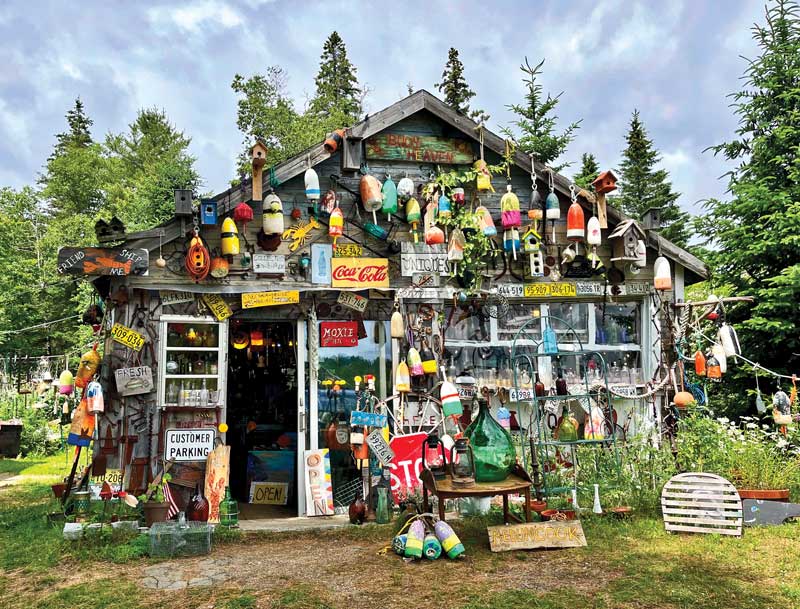
Dave Copp used to lobster out of Rockland, but he hung up his fisherman’s bibs after moving to Friendship decades ago. These days, he presides over Dave’s Bottle and Buoy Heaven, his quirky shop on Cushing Road just northeast of the village. When we entered the gray-shingled garage, we were nearly overwhelmed: Jumbles of lobster-pot buoys hung from the ceiling, our heads barely clearing their spindles. Thousands of colorful old bottles crowded every inch of counter and shelf space and refracted sunlight from windowsill perches. Copp greeted us warmly, offered me a can of soda from the fridge, and told me tales of how he acquires his treasures.
I couldn’t help but notice a chipmunk scurrying back and forth just beyond the open back door. When I commented on it, Copp led me outside and took a fistful of birdseed from a feeder. Crouching down, he held his hand out and the critter ran over and jumped into it. As Copp stroked its back, he explained that the chipmunk (distinguished by a very short tail) had been there for five years.
We decided it was time for our lunch, too. Leaving Copp and his pint-sized pal, we drove a short way down the road to Jameson Point Lobster Company, a casual eatery in a converted auto-repair garage. The young woman at the counter gave us a big smile as she happily took our order. The clam roll overflowed with light, crispy full-belly clams, and the haddock sandwich’s perfectly fried fillet dwarfed its bun.
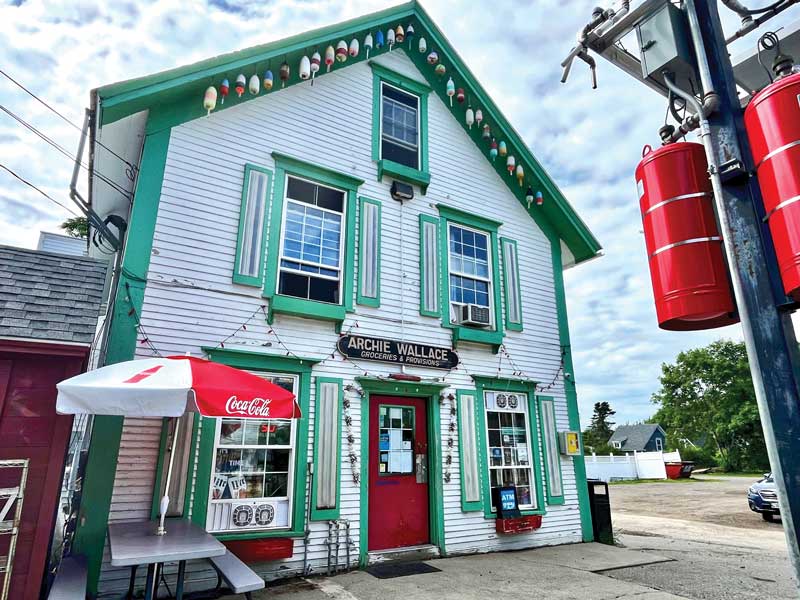
Just up the road at Wallace’s Market, we were greeted by more smiling faces. We’d learned that in the fall of 2024, an Indian family had bought this landmark general store, which has stood at the heart of the village for more than a century and a half. We’d also heard that, in addition to pizzas, sandwiches, lobster rolls, and other commonly found foods, Indian dishes were offered for takeout on the weekends. We selected a generous portion of butter chicken from the refrigerator case. At the register, a very engaging young man mentioned that homemade naan was also available. As we waited for ours to be toasted on the grill, several customers stopped in for groceries. The easygoing conversations and chuckles exchanged between them and the shopkeeper had the gratifying ring of longtime familiarity.
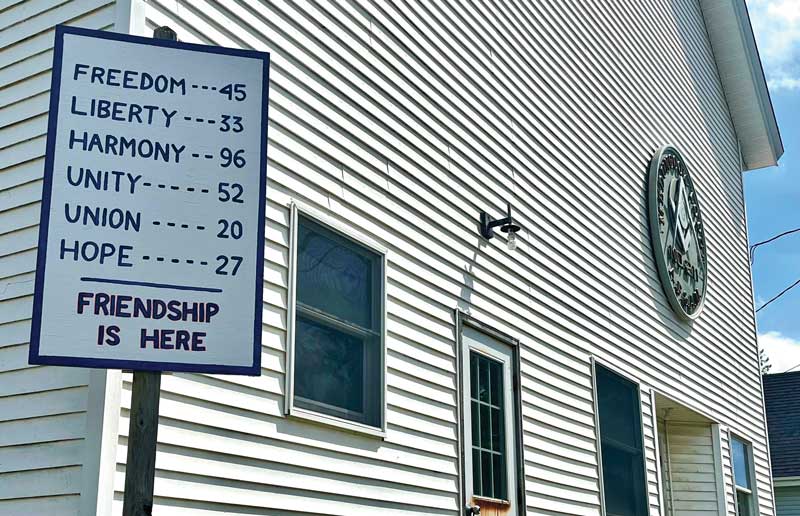
As we left town, I spied a small sign posted outside the Masonic Hall. It listed a half dozen Maine towns such as Freedom, Harmony, and Hope, and gave the distance to each of them. At the bottom, it declared “Friendship is Here.” After a day spent poking around this welcoming little fishing town, I’m happy to vouch for the accuracy of that statement.
✮
Contributing editor Mimi Bigelow Steadman lives on the Damariscotta River in Edgecomb.
If You Go to Friendship
On the water
Harbormaster Scott Delano recommends that visiting pleasure craft anchor outside the fleet of lobsterboats. The town of Friendship does not have any moorings for transient yachts. He also advises that fuel may be available at Simmons Wharf or at the Friendship Lobster Co-op.
Eat
Jameson Point Lobster Company serves delectable, just-caught clams, lobster, haddock, crab, shrimp, and scallops in a variety of dishes. Chicken and burgers are also on the menu. Order at the counter and choose a picnic table indoors or out on the porch. When your order’s ready, it will be brought to you. The restaurant is open mid-May to the end of September. In addition to being well stocked with groceries, Wallace’s Market prepares a variety of takeout foods including pizzas, deli sandwiches, lobster rolls, burgers, fried chicken, and, on weekends, prepared Indian dishes.
Do
The town’s annual Friendship Day has taken place on a Saturday in mid-July for more than 40 years. Festivities begin with a pie-eating contest the evening before and continue into Saturday with a full schedule of activities including a pancake breakfast, parade, craft fair, horse and carriage rides, and face painting. The celebration concludes on Sunday morning with hotly contested lobsterboat races. The Friendship Historical Society’s Museum is tucked inside a diminutive redbrick schoolhouse at the intersection of Route 220 and Martin Point Road. It served the community’s students from 1851 until 1923. Open times are limited, but the picturesque building is worthy of a photo stop even when it’s closed.
Shop
Choose a souvenir lobster pot buoy or vintage bottle from the staggering collection at Dave’s Bottle and Buoy Heaven on Route 220 while shooting the breeze with Dave. Fine artist Pam Cabañas showcases her compelling mixed-media seascapes and coastal vignettes, many rendered in gray and sepia tones, at her Salt Pond Studio and gallery in a repurposed circa 1850 schoolhouse. Throughout the summer, Cabañas also mounts changing exhibitions of exceptional work by other Midcoast artists. At the Dragusta Gallery, Christine Cahalane paints animals, landscapes, boats, and more, primarily working in pastel and oil.
Hike and Paddle
Not far from the village center lie several scenic hiking opportunities. Overseen by Midcoast Audubon, the Nelson Nature Preserve comprises forest and wetlands, with large areas of cushiony moss. Near the tip of a peninsula, the Martin Point Wildlife Reserve is bounded to the west by the rocky shore of Muscongus Bay and to the east by Crystal Pond, where ice was once harvested every winter. Keep a lookout for fairy houses along the Spruce Woods Loop, one of three easy trails within the property, which is administered by the Mid-Coast Conservancy. You may also see evidence of busy beavers as well as foxes, deer, eagles, and ospreys. Muscongus Bay offers protected paddling among a host of scenic islands. Single and tandem ocean kayaks may be rented by the half and full day from Blackwing Kayak Rentals, located at Bird’s Nest B&B.