

Photographs by Sean Graves
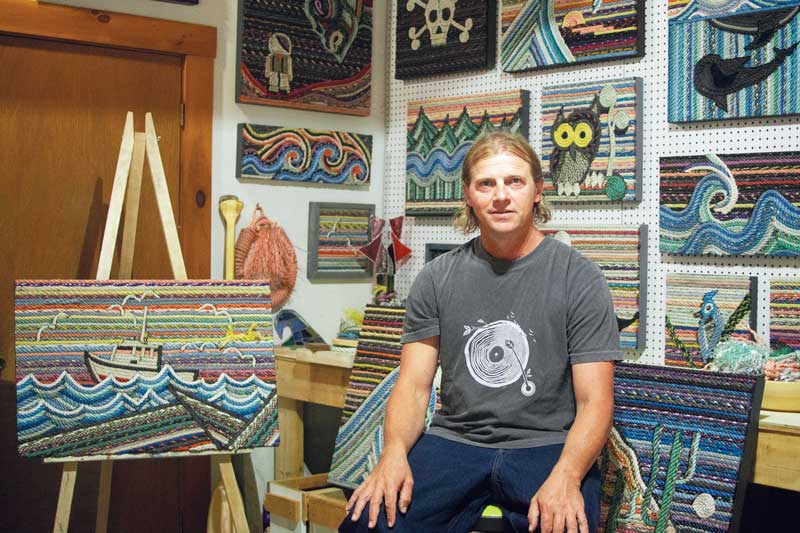
It all began with a walk on the beach and a piece of washed up pot warp. That’s what launched Eric Darling on a decade-long voyage that he calls his Drift Rope Project.
“I was painting but also picking up washed up lobster warp,” he said, recalling his transition from using brushes and easels to finding new and creative ways to put marine debris to use. “I was living in Cushing and would walk the shore, and I was always finding little pieces and would pick them up. I kind of coined the term ‘drift rope’ to describe them.”
And because each length of discarded line he finds while trying to help keep the beaches he visits clean is different, the Drift Rope Project is always evolving.
Here’s how this adventure began. When Darling was invited to participate in a show at the Sohns Gallery in Bangor, an idea struck him. Artists in the show were given wood panels to use for their works. “I had an aversion to painting on wood so I thought maybe I could use the rope as a found object and it sparked the whole project.”
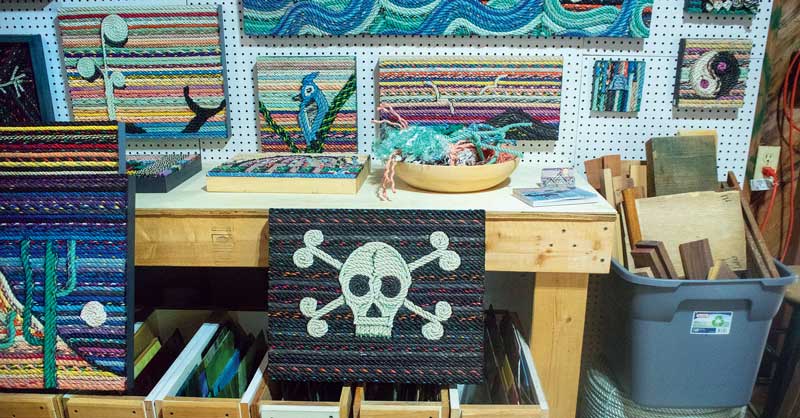
Despite having no formal training, Darling’s career spans more than 20 years. Originally, he painted “Skullys,” black and white skeletons inspired by his photography. The Drift Rope Project, which has been his primary focus for more than a decade, began with similar monochromatic aspirations.
“I just wanted to be a black and white artist,” Darling said about the early stages of the project. “And then I had children and color just infiltrated my world. It seems like everything influences the art even though you don’t know it’s going to.”
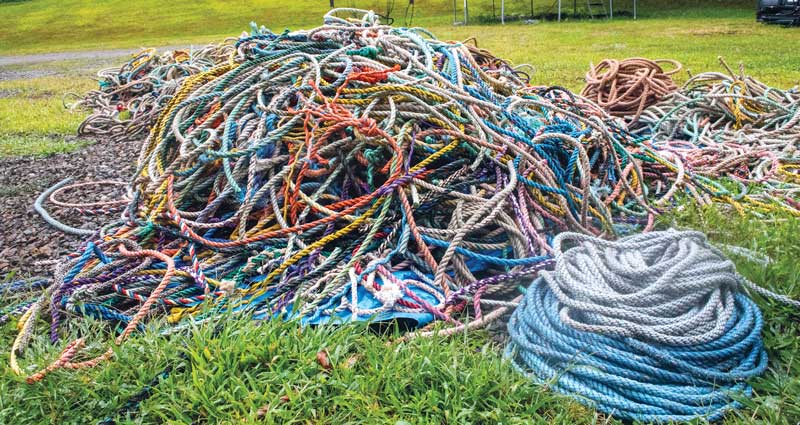
Darling now lives in Appleton with his wife, Lisa, and their children. The walls of his studio and gallery are adorned with finished works and even more in progress are tucked away throughout the space. The mailbox pole is wrapped in lobster warp and there is a tangle of 30 or so yards of the material piled up in the driveway in a rainbow of colors. He relies on the weather to prepare the rope for use in his work.
“I leave it right outside in the elements and let the rain, snow, and sun clean it up. I think all those little bits add to it, the distressed feel of the rope. I’m glad I get to give it a mission and keep it out of the landfill.”
A big reason for the constant change that the project has gone through is Darling’s need to avoid repeating himself in his work.
“I’m finding that there are all these sculptural elements to working with rope. I’m essentially trying to paint with the rope, and using hand tools to move the rope where I want it to be,” Darling said as he talked about changes to his process. “I’m also trying to explore freestanding outdoor sculptures. I’m always trying to do the next thing differently because I struggle with repetition. I try not to use the same patterns because that’s what my mind wants me to do. Instead, I like to start every piece over fresh.”
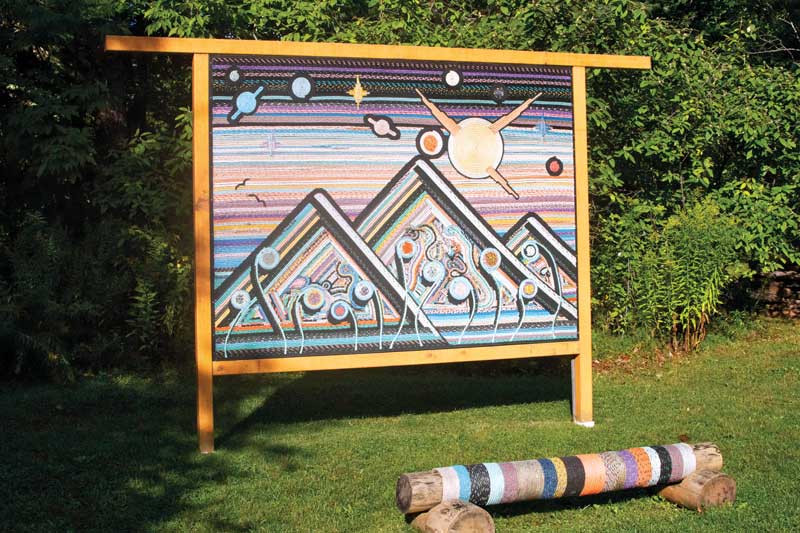
This perspective has also led to Darling finding unique ways to display the art. His first brush of notoriety with the Drift Rope Project came after he received a grant from the Maine Arts Commission in 2021 and was awarded an installation at Merryspring Nature Center in Camden. The piece he installed is a landscape of a mountain with swirls jutting up from the bottom representing plants and trees, and a sky full of planets across the top. The size of the work and the varying shades of rope used throughout are awe-inspiring. The grant gave him an opportunity to experiment with the process for adhering the rope to the wood.
“I was trying to imagine kids ripping it apart and I said, ‘I have to make this bulletproof.’ It’s out in the elements and still holding up well four years later, still vibrant.”
In addition to the nature center and more traditional galleries, Darling has shown his art in public libraries, hospital waiting rooms, and even a cannabis dispensary in Thomaston.
“You never know what’s going to happen and what’s going to be a good opportunity. I’m trying to own the form before it gets copied.”
Darling’s biggest break came when his work was featured in an episode of the reality show, Maine Cabin Masters, in early 2025.
“Ever since then, I’ve had more of a national reach and people from all over the country are asking where to find my work and I’ve been taking commissions. I’m starting to feel like my art is becoming more of a destination.” Then, only half-joking, he adds, “Hopefully I can have a Drift Rope Project shop next to every Sea Bags shop.”
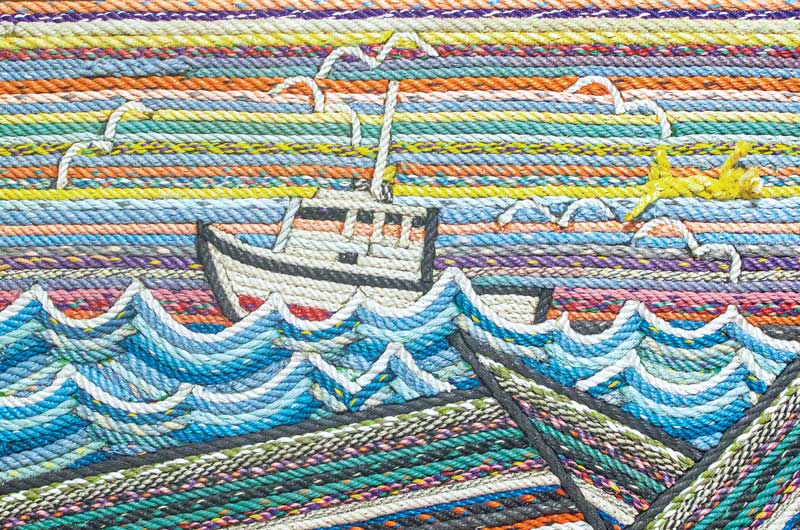
This fall, Darling’s show “Oils to Drift Rope: A Ten-Year Reflection” was on exhibit at the Durham Public Library and Atlantic Farms in Thomaston. Where the project will take him next is anyone’s guess, including for the artist himself. From smaller pieces on wood panels to large-scale sculptures and everything in between, Darling seems content to let his unique medium shape his career. He wants his work to be accessible to as many people as possible, further proof of his evolution as a working artist.
“When I was painting, I coveted the art and I didn’t sell anything. People would ask me questions about it, and I would leave it up to them to figure out. My wife would say ‘You’ve got to give them the story!’ I’m trying to do more of that with the Drift Rope Project. There are no rules so I’m always trying to break them.”
✮
Occasional contributing author Sean Graves is the office manager at Maine Boats, Homes & Harbors. He lives in Northport, Maine, with his wife, daughter, and two hounds.
View more of Eric Darling’s artwork at his site: ericdarlingart.com.
A Green initiative: #LoveMaineWaters
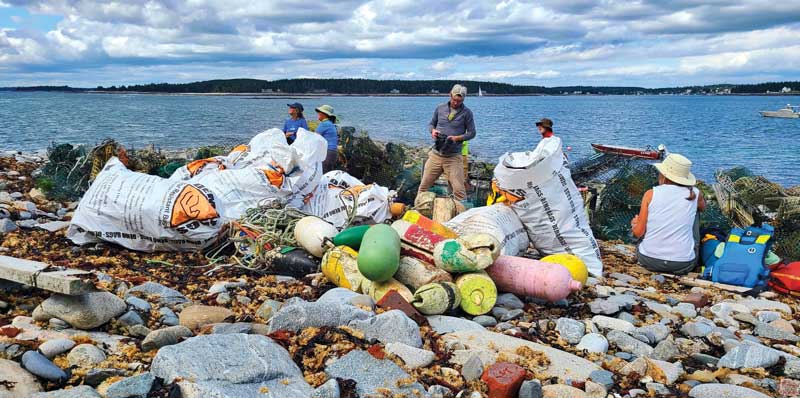
A group of Maine’s marine-focused non-profit organizations are collaborating on a grassroots effort to promote respect, safety, and best practices for protecting the state’s iconic bodies of water. In 2022, Friends of Casco Bay, Maine Coast Fishermen’s Association, Maine Island Trail Association, and Maine Marine Trades Association launched #LoveMaineWaters to promote clean, safe, resilient, and respectful sharing of Maine’s freshwater and coastal sites. The ongoing campaign raises awareness by distributing information through the website, lovemainewaters.org, and sponsors events such as Maine Coast Heritage Trust’s volunteer removal days.
According to the site, “Water connects and nourishes every person, plant, and critter in the state of Maine. From small streams and ponds to major rivers and giant lakes, all the way to the expansive coastline and Gulf of Maine; the quality of water has vital health and economic impacts for all of us.”
The site has a host of resources available for anyone who wants to pitch in and spread the word. The organizations invite all Maine businesses, non-profits, and individuals to use the resources available to show everyone how we can all #LoveMaineWaters a little bit more. —Sean Graves